 Pressmediaofindia

Related Articles



29-03-2026
LAUSANNE, SWITZERLAND: The women’s category of Olympic sports will be limited to biological females from 2028.
 The International Olympic Committee (IOC) says eligibility will be determined by an “once-in-a-lifetime” sex test, which would prevent transgender women and those with differences in sexual development (DSD) who have gone through male puberty from competing.
It will take effect from the Los Angeles Olympics.
IOC president Kirsty Coventry said the policy was “led by medical experts”.
“At the Olympic Games even the smallest margins can be the difference between victory and defeat,” she said.
“So it is absolutely clear that it would not be fair for biological males to compete in the female category. In addition, in some sports it would simply not be safe.”
The IOC said eligibility for the female category would be determined by a screening to detect the SRY gene, the sex-determining region Y gene which is part of the Y chromosome and causes male characteristics to develop.
“The IOC considers that SRY gene screening via saliva, cheek swab or blood sample is un-intrusive compared to other possible methods,” it said.
“Athletes who screen negative for the SRY gene permanently satisfy this policy’s eligibility criteria for competition in the female category.
“Unless there is reason to believe that a negative reading is in error, this will be an once-in-a-lifetime test.”
The IOC said athletes who fail the test would “continue to be included in all other classifications for which they qualify. For example, they are eligible for any male category, including in a designated male slot within any mixed category, and any open category, or in sports and events that do not classify athletes by sex.”
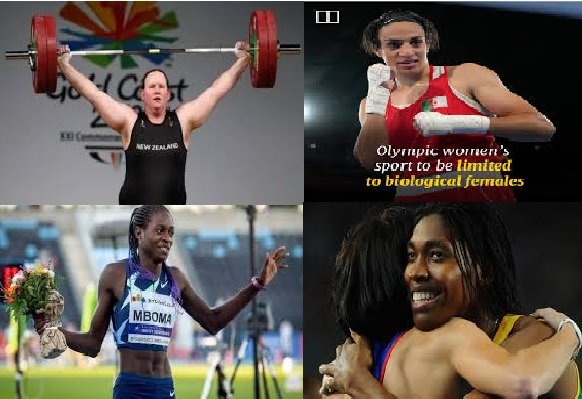 Until this announcement, the IOC left sex eligibility regulations to the governing bodies of individual sports, rather than applying a universal approach.
While athletics, swimming, cycling and rowing have brought in bans, many others allowed transgender women to compete in female competition if they lowered their testosterone levels.
This is a hugely significant decision by the IOC following years of controversy over the participation of transgender and DSD athletes in female competition and intense debate over how sports should balance fairness and safety with inclusion.
In a reflection of just how sensitive an area of policy this has become, the IOC has traditionally left it to international sports to decide on eligibility criteria for female competition but in a major shift in policy, all federations will now be expected to follow suit. The IOC said its working group reviewed the latest scientific evidence over the past 18 months, which it said showed a “clear consensus” that “male sex provides a performance advantage in all sports and events that rely on strength, power and endurance”.
It consulted a “wide range of experts in relevant fields” and an online athlete survey that had more than 1,100 responses.
Interviews were also conducted with “impacted athletes from around the world”.
Transgender and DSD athlete controversies
In recent years a growing number of sports federations, including World Aquatics and World Athletics, have barred athletes who have undergone male puberty from competing in elite female competition amid concerns over fairness and safety.
Last May the Football Association and England and Wales Cricket Board were among a number of British sports bodies to follow suit after the UK Supreme Court’s ruling that the legal definition of a woman was based on biological sex. (Int’l Monitoring Desk)