 Pressmediaofindia
Related Articles



07-04-2026
NEW DELHI: In mid-20th Century Bengal in eastern India, some of the biggest female stars on stage were actually men.
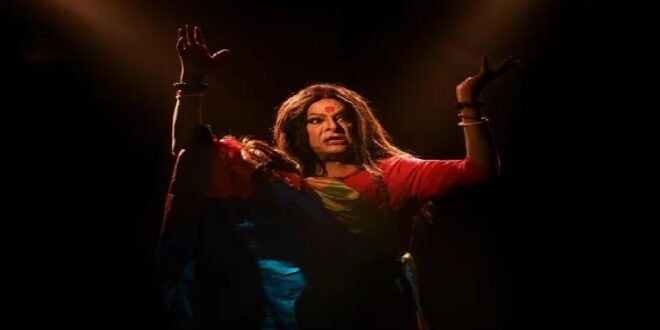
 Foremost among them was Chapal Bhaduri better known as Chapal Rani, the reigning “queen” of jatra, a travelling theatre tradition that once drew vast, fervent crowds.
Male actors playing female roles were a familiar trope across global theatre, from Europe to Japan and China.
In Bengal, the form flourished in jatra, a rural, open-air spectacle of music, myth and melodrama that often rivalled cinema in reach, though not in rewards. Rooted in epic and devotional storytelling, it played out on all-sided stages, driven by heightened voice, gesture and costume.
In a new book, Chapal Rani: The Last Queen of Bengal, writer Sandip Roy traces Bhaduri’s journey from stardom to obscurity and, in doing so, captures a vanishing world where gender itself was an act.
For decades, female roles in jatra were played by men known as purush ranis, or male queens but even at its height, the form carried a certain stigma.
Colonial-era urban elites in Calcutta, influenced by European tastes, often dismissed jatra as rustic or unsophisticated. A 19th-Century Anglo-Indian journal derided the voices of boys playing women as “discordant”, comparing them unfavorably to “howling jackals”.
By the time Bhaduri entered the stage in the 1950s, that world was already shifting. Women had begun to take up acting roles. The space for female impersonators was narrowing. Still, Bhaduri stood out.
Born in 1939 in north Kolkata to stage actress Prabha Devi, Bhadhuri grew up around performers. He began acting at 16. “I had girlish manners, a girlish voice,” he would later say.
On stage, he transformed. He played queens, courtesans, goddesses and brothel madams with a studied grace.
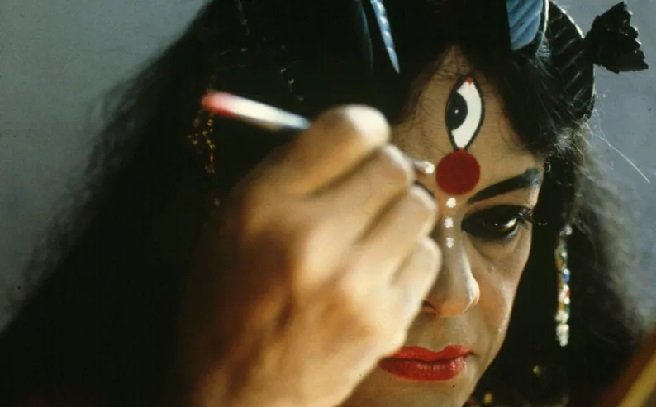
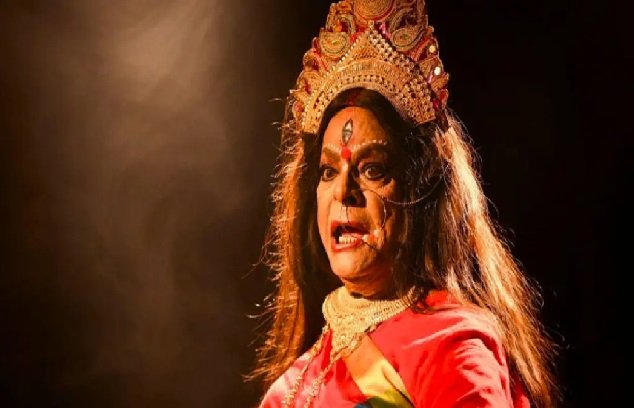 His costumes were carefully assembled and sometimes improvised. Early on, he used rags to shape the silhouette of his bosom. Later, he turned to sponge. His beauty routine included creams, small rituals in pursuit of an illusion he took seriously. “Femininity was always a part of me,” Bhaduri said.
His performances were not comic turns or caricatures. They were immersive, often deeply felt. In a theatrical culture where queer-coded characters were frequently played for ridicule, Bhaduri’s work carried a different weight.
Roy writes, “In Indian performing art where playing gay or queer was in the form of characters who are ridiculed, Chapal morphed into a woman and played his roles with honesty and an act of bravery.”
He did not openly identify as gay given the complication of social life in middle class Bengal in the times he lived in. Admiration was not lacking though. He received letters proffering affection and proposals for affairs and offers of relationships came from fans and lovers alike.
Bhaduri was picky and proud but emphatically said, “I refuse to apologize for love.”
His one long relationship lasted over three decades, even as his partner married and had children.
Bhaduri remained on the margins, present, but never fully acknowledged and in the end more of a housekeeper. The decline of his career came not with a single event, but a series of shifts.
As women became more common on stage, audiences began to reject male actors in female roles.
The very convention that had once sustained jatra began to unravel. (BBC)