 Pressmediaofindia
Related Articles

04-01-2026
WASHINGTON: After months of threats and pressure tactics, the United States has bombed Venezuela and toppled its president, Nicolas Maduro, who was seized and taken to New York (NY), where he will be put on trial.
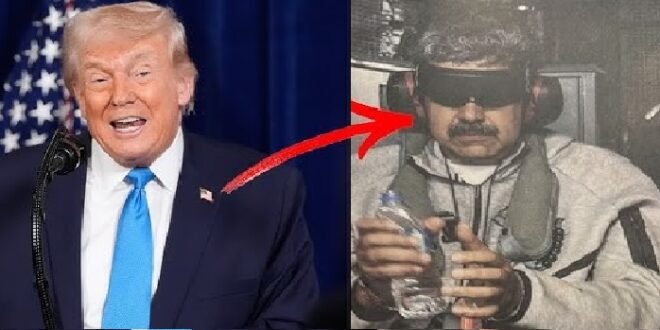
Maduro arrived on Saturday evening at an American military base after his “capture” by US forces in Caracas.
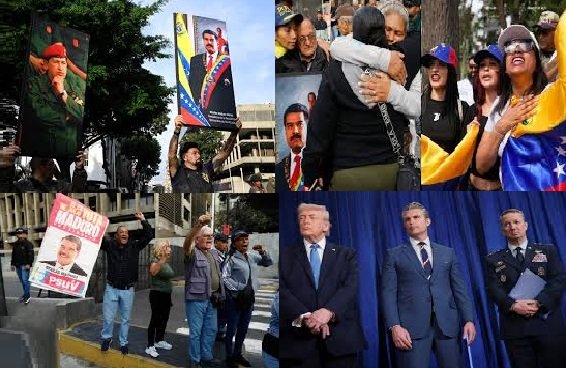 Venezuelan Vice President Delcy Rodriguez has slammed the “kidnapping” of Maduro and said that he is “the only president of Venezuela”.
US President Donald Trump says the Washington will “run” Venezuela and tap its vast oil reserves, but he gave few details on how the US will do this.
The United Nations Security Council is due to meet on Monday on the matter, with Secretary-General Antonio Guterres saying the US actions set “a dangerous precedent”.
40 people killed in US strikes on Venezuela
The New York Times is reporting that at least 40 people were killed in US strikes on Venezuela.
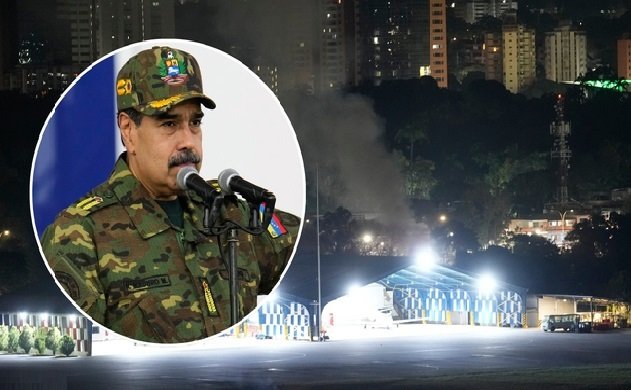
It cited an unnamed Venezuelan official who discussed the findings of preliminary assessments. The Times said that those killed include civilians and military members, and that a US air strike hit a three-storey residential building in the Catia La Mar neighborhood, located in a poor coastal area west of the Caracas airport.
Among those killed was an 80-year-old woman named Rosa Gonzalez and her family? Another person was also reported injured in the strike.
Wilman Gonzalez, a nephew who was injured in the attack, said, “I don’t know” when asked where he would go after he lost his home.
A 70-year-old neighbor named Jorge told The Times that he had lost everything in the air strike.
 Journalists have been speaking to Leon Fresco, a former deputy assistant attorney general at the US Department of Justice.
He said Maduro will be “arraigned in court”, either on Monday or Tuesday, “for the crimes of conspiracy and drug trafficking”.
“He will have to either plead guilty or innocent most people plead not guilty in this situation and then he will be asking for bond, at which time, most likely, [he] will be denied because, you know, he is an international leader, and he’s a very likely fugitive if he was to be sent out on bond,” Fresco told Al Jazeera.
Maduro will then have the option for what is called a speedy trial, which requires proceedings to be held within 70 days. If he waives that right, “then the trial could take up to a year or two years, and there’s going to be a lot of jurisdictional arguments”, Fresco said.
The former official also said that Maduro’s case may have some parallels to the US’s capture and prosecution of Panamanian military leader Manuel Noriega more than three decades ago. Noriega was imprisoned and held in the US until 2010, and later sent to Panama, where he died in jail in 2017.
Fresco said that Noriega’s lawyers also took up the issue of jurisdiction, but their arguments were “rejected at the time”.
In Maduro’s case, “there’s likely to be a lot of jurisdictional arguments, and we’ll see if the courts will have any more sympathy for those than it had in the Noriega case, or whether it will just apply those precedents and allow the prosecution to continue”, he said.
Where is Maduro now?
According to US media, the Venezuelan president was flown from the Stewart air force base in New York State to the Brooklyn borough of New York City by helicopter. Maduro is being held at the Metropolitan Detention Center there. (Int’l Monitoring Desk)