 Pressmediaofindia
Related Articles


06-12-2025
Civilian representatives from Lebanon and Israel joined a session of the US-chaired ceasefire monitoring committee in Naqoura, marking the first direct talks between the two countries in more than four decades.
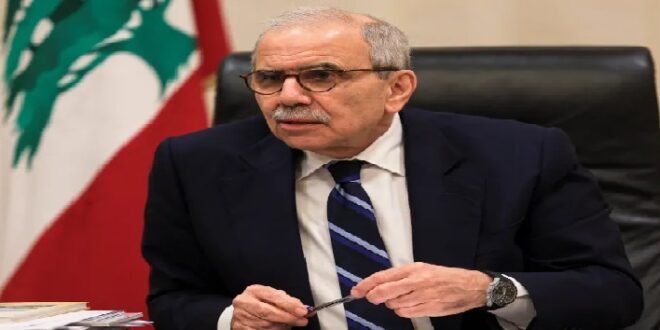
 Lebanese Prime Minister Nawaf Salam said on Wednesday that Beirut is prepared to engage in negotiations extending beyond security matters, but underlined these are not peace talks and “normalization is tied to a peace process”.
Salam said these negotiations are aimed solely at “the cessation of hostilities”, the “release of Lebanese hostages”, and “the complete Israeli withdrawal” from Lebanese territory.
Salam said Lebanon remained committed to the 2002 Arab Peace Initiative which offers a full normalization of relations with Israel in return for its complete withdrawal from territory it occupied in 1967 and has no intention of concluding a separate peace deal with Israel.
The participation of civilian envoys could help “defuse tensions”, he said, noting deadly Israeli air strikes recently are a clear sign of rising escalation.
The committee convened for about three hours along the Blue Line, the frontier between Lebanon and Israel.
A statement issued afterwards welcomed the addition of civilian envoys as an “important step” toward anchoring the process in “lasting civilian as well as military dialogue”, and said the committee hoped to “nurture peace” along the long-volatile border.
‘Renewed escalation’
The United States has for months urged both sides to broaden the scope of the committee beyond just overseeing the 2024 ceasefire between Israel and Hezbollah. The latest meeting comes during mounting fears of renewed escalation after Israeli air strikes hit Lebanon’s capital last month.
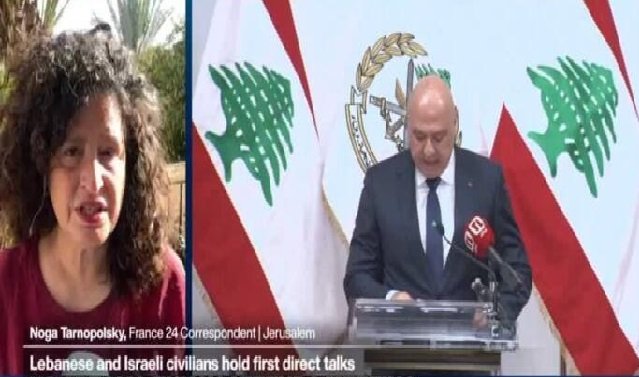 Israel has kept up regular air strikes in Lebanon, usually saying it is targeting Hezbollah members and facilities, and kept troops in five areas in the south despite the ceasefire’s stipulation that it pull out entirely.
Israeli government spokesperson Shosh Bedrosian, in an online briefing to reporters, said Wednesday’s meeting was “a historic development”.
“This direct meeting between Israel and Lebanon took place as a result of Prime Minister (Benjamin) Netanyahu’s efforts to change the face of the Middle East. As the prime minister has said, there are unique opportunities to create peace with our neighbors,” Bedrosian said.
Lebanon’s presidential office announced Simon Karam, a lawyer and former ambassador to Washington in the early 1990s, would represent Beirut in the afternoon session, alongside US envoy Morgan Ortagus.
His appointment followed consultations between the president, prime minister, and parliament speaker, a statement said.
The inclusion of Karam prompted criticism from some political actors in Lebanon who view the move as a concession. Salam defended the decision insisting it was politically sound and had national backing.
He also accused Netanyahu of overstating the significance of the appointment, stressing Beirut is not entering peace negotiations.
Earlier, Netanyahu framed Karam’s participation as “the first attempt to establish a foundation for relations and economic cooperation between Israel and Lebanon”, after the Lebanese presidency announced the decision.
Netanyahu’s office said Israel sent the deputy head of the foreign policy division at its National Security Council to the meeting, describing the session as part of ongoing US-mediated dialogue. (Int’l Monitoring Desk)