 Pressmediaofindia
Related Articles

14-02-2026
NABLUS/ WEST BANK: Five months after Israel’s Supreme Court ruled that its prisons were failing to provide enough food for Palestinian detainees and ordered conditions be improved, emaciated prisoners are still emerging with tales of extreme hunger and abuse.
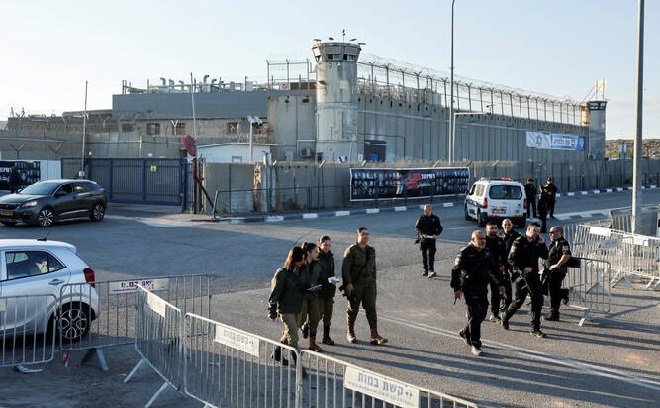 Samer Khawaireh, 45, told media that all he was given to eat in Israel’s Megiddo and Nafha prisons was ten thin pieces of bread over the course of a day, with a bit of hummus and tahini. Twice a week some tuna.
Videos saved on Khawaireh’s phone show him at normal weight before he was detained in the West Bank city of Nablus last April and clearly emaciated upon his release. He says he lost 22 kg (49 pounds) during nine months in captivity, emerging a month ago covered in scabies sores and so gaunt and disheveled his 9-year-old son Azadeen didn’t recognize him.
Media could not independently determine the total number of prisons where the scarcity of food prevailed, or the total number of inmates who experienced its toll.
Reuters could not independently verify Khawaireh’s diet during his captivity, the reasons for his extreme weight loss, or exactly how widespread such experience is among the 9,000 Palestinians held in Israeli jails but it was consistent with descriptions in some reports compiled by lawyers after prison visits. Media reviewed 13 such reports from December and January, in which 27 prisoners complained of a lack of food, with most saying provisions had not changed since the court order.
The Association for Civil Rights in Israel (ACRI), which was involved in last year’s landmark court case that led to the order for better treatment for prisoners, has accused the government of harboring a “policy of starvation” in prisons.
The Israel Prisons Service declined to comment on Khawaireh’s individual case but said it “rejects allegations of ‘starvation’ or systematic neglect. Nutrition and medical care are provided based on professional standards and operational procedures.”
 The service “operates in accordance with the law and court rulings” and all complaints are investigated through official channels, a spokesperson said.
“Basic rights, including access to food, medical care, and adequate living conditions, are provided in accordance with the law and applicable procedures, by professionally trained staff.”
Khawaireh, a journalist at a Nablus radio station who was held without charge, said he was never told why he was detained in a night raid on his house in April. Israel’s military declined to comment. Independent verification of the treatment of detainees has become more difficult since the start of the Gaza War, when Israel barred prison visits by the International Committee of the Red Cross, a role the Geneva-based body has played in conflicts around the world for a century.
ACRI has petitioned Israel’s Supreme Court to allow Red Cross access to Palestinian detainees. It has also applied to court to have the prison service held in contempt for failing to comply with last September’s order that it improve conditions.
“All the indications that we’re getting are that not much has changed” since the court ruling, the group’s executive director Noa Sattath told media.
“The prisoners are not getting more food if they ask for it. There hasn’t been any medical examination of the situation of the prisoners and the prisoners are still hungry.” The Supreme Court did not respond to a request for comment on the case.
The number of detainees held by Israel swelled after the Hamas-led attacks on October 7, 2023, with thousands swept up during Israel’s assault on Gaza and a crackdown in the occupied West Bank, though hundreds were freed under a ceasefire last October. (Int’l News Desk)