 Pressmediaofindia
Related Articles


20-02-2026
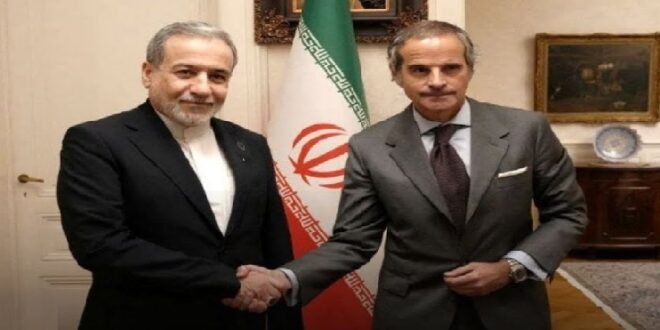
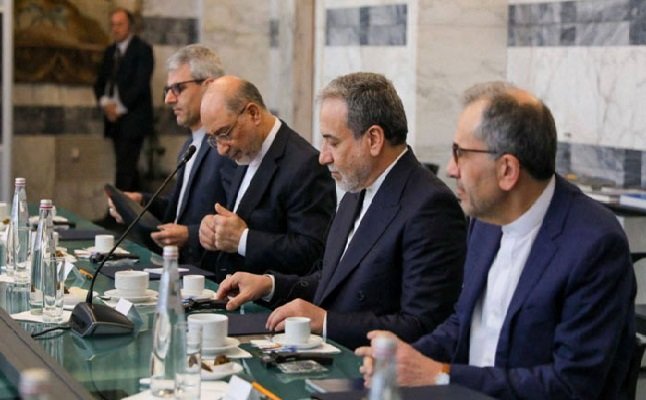
TEHRAN: The second round of indirect nuclear talks between the US and Iran have ended in Geneva, Switzerland.
Iran’s Foreign Minister Abbas Araghchi says Tehran and Washington have reached an understanding on main principles during the Geneva talks.
 Iran’s supreme leader Ayatollah Khamenei says US will not be able to destroy the Islamic Republic.
While the US sought to expand the scope of talks to non-nuclear issues like Iran’s missile stockpile, Tehran said it was willing to discuss only curbs on its nuclear program in exchange for sanctions relief and will not accept zero uranium enrichment.
Iran doesn’t seek nuclear weapons: Araghchi
The Iranian foreign minister says Tehran has repeatedly affirmed that it “neither seeks to manufacture nor to acquire nuclear weapons, which have no place whatsoever in Iran’s national security doctrine”.
Araghchi told reporters that the Nuclear Non-Proliferation Treaty, however, “explicitly recognizes the inalienable right of all state parties to develop research, produce and use nuclear energy, including enrichment for peaceful purposes”.
“This right is inherent, non-negotiable and legally binding,” he said.
Deal on ballistic missiles would result in US inspections of all Iranian military sites
Foad Izadi, an associate professor at the University of Tehran, has told Al Jazeera that the United States has been insisting on limiting Iran’s ballistic missile range, keeping it around 300-km (186-mile) level, “but there are two problems with that”.
“The first problem is that Israeli bases are much further away, so if the Israelis attack again, Iran cannot hit those bases,” he said.
“The second problem is that whenever you enter into an agreement on ballistic missiles, the other side has to inspect. That means that all Iranian military sites would be available to the United States to inspect,” Izadi added.
 The Iranian foreign minister says the progress made in talks does not mean his country will reach an agreement soon with Washington on Tehran’s nuclear program.
Araghchi said “the path for a deal has started”, adding the two parties still have topics on which to work on in his first remarks after the second round of nuclear talks with the United States concluded in Geneva.
“I can say compared to the last round we’ve had very serious discussions and there was a constructive atmosphere where we exchanged our point of view,” he told reporters.
“Those ideas were discussed and we came to some agreements and some main principles. And based on those principles, we will eventually draft a document… We are hopeful we can achieve this. When we reach the stage of drafting a document, naturally the process will slow down.”
In his speech today, Iran’s supreme leader said that if the US is coming up with fixed outcomes, then the process is not negotiation, it is just a position of the terms.
That is regarded as a warning to the Iranian negotiating team that the process should remain as negotiations.
So, back and forth, there must be compromises but if the US comes up with dictation or imposition of the terms, then it is not negotiation anymore that is Iran’s message.
Iran is clearly saying that this should remain the methodology of the talks, there should not be any imposition.
These were high-stakes talks. As you see, the chessboard for war has been set in the Middle East, with more aircraft carriers, B-2 bombers in the sky, and more troop deployments by the United States. (Int’l Monitoring Desk)