 Pressmediaofindia
Related Articles

03-02-2026
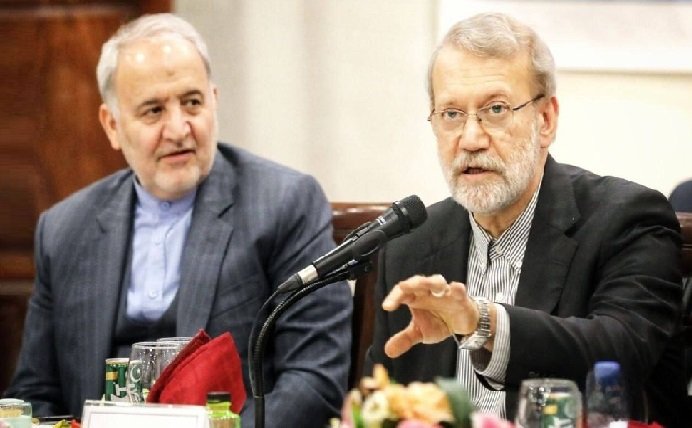
TEHRAN/ BRUSSELS: Iran considers as “terrorist groups” the armies of European Union (EU) countries that listed the Islamic Revolutionary Guard Corps on the bloc’s list of terrorist organizations, Parliament Speaker Mohammad Baqer Qalibaf said on Sunday.
 The EU marked a symbolic shift in its approach to Iran’s leadership on Thursday by designating the Revolutionary Guards as a terrorist organization, following what turned out to be the Islamic Republic’s bloodiest crackdown of protests since its establishment in 1979.
“By trying to hit the Revolutionary Guards … the Europeans actually shot themselves in the foot and once again made a decision against the interests of their people by blindly obeying the Americans,” Mohammad Baqer Qalibaf told his fellow MPs, all wearing Revolutionary Guards uniforms in support to the elite force.
“According to Article 7 of the law on countermeasures against the designation of the Revolutionary Guards as a terrorist organization, the armies of European countries are considered terrorist groups.”
Qalibaf added that the national security parliamentary commission would deliberate on the expulsion of EU countries’ military attaches and follow up on the issue with the foreign ministry.
Set up after Iran’s 1979 Islamic Revolution to protect the Shi’ite clerical ruling system, the Revolutionary Guards have great sway in the country, controlling swathes of the economy and armed forces.
On 29th January, EU foreign ministers on Thursday agreed to include the Islamic Revolutionary Guard Corps on the bloc’s list of terrorist organizations, putting the powerful guards in a category similar to that of Islamic State and al Qaeda and marking a symbolic shift in Europe’s approach to Iran’s leadership.
“Repression cannot go unanswered,” European Union foreign policy chief Kaja Kallas wrote on social media platform. “Any regime that kills thousands of its own people is working toward its own demise.”
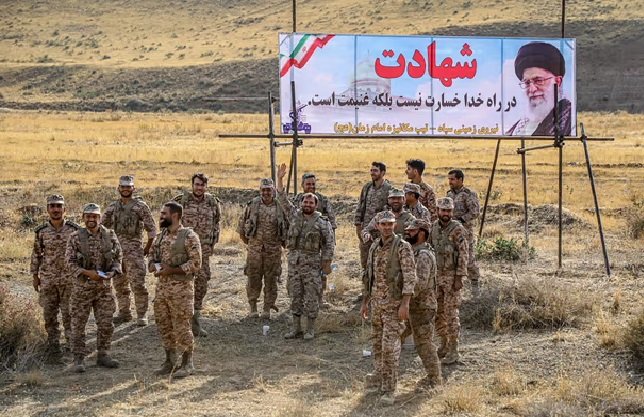 Set up after Iran’s 1979 Islamic Revolution to protect the Shi’ite clerical ruling system, the IRGC has great sway in the country, controlling swathes of the economy and armed forces. The guards were also put in charge of Iran’s ballistic missile and nuclear programs.
While some EU member states have previously pushed for the IRGC to be added to the EU’s terrorist list, others have been more cautious, fearing that it could hinder communication with Iran’s government and endanger European citizens in the country but a brutal crackdown on a nationwide protest movement earlier this month, killing thousands, increased momentum for the move.
“It’s important that we send this signal that the bloodshed that we’ve seen, the bestiality of the violence that’s been used against protesters, cannot be tolerated,” Dutch Foreign Minister David van Weel said on Thursday morning.
France and Italy, which were previously reluctant to list the IRGC, lent their backing this week.
EU expects dialogue with Iran to continue
Despite concerns from some capitals that a decision to label the IRGC a terrorist organization could lead to a complete breakdown in ties with Iran, Kallas told reporters on Thursday morning that “the estimate is that still the diplomatic channels will remain open.”
Italy’s Foreign Minister Antonio Tajani said the agreement “does not mean that we should not continue to engage in dialogue.”
Iran’s Foreign Minister Abbas Araqchi criticized the EU ministers’ decision. (Int’l News Desk)