 Pressmediaofindia
Related Articles

08-03-2026
Bureau Report
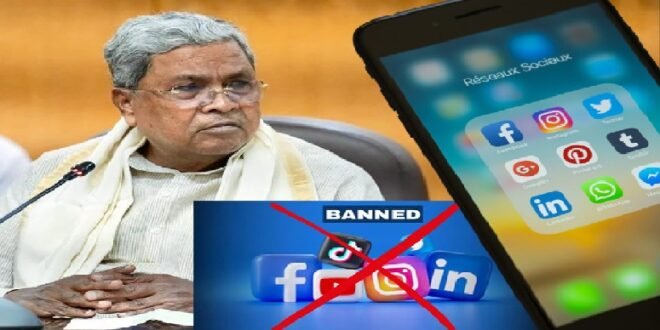
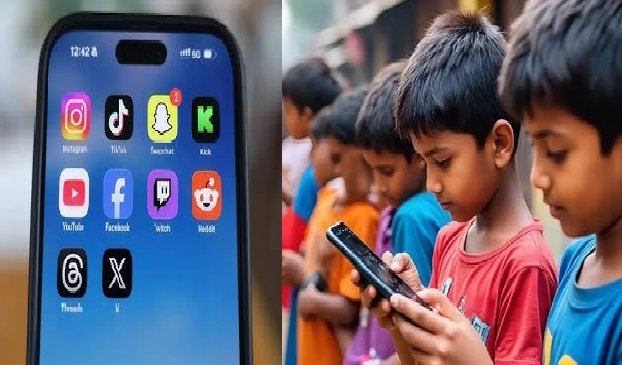
NEW DELHI: The southern Indian state of Karnataka, home to the tech hub of Bengaluru, banned the use of social media by those under the age of 16 on Friday, becoming the first in India to join global calls for more scrutiny of minors’ digital usage.
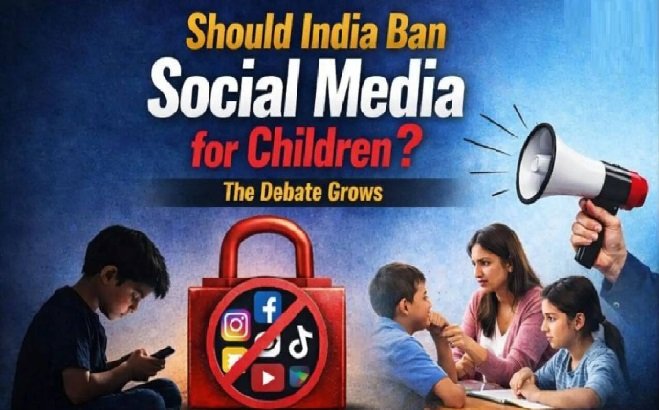 Concerns surrounding children’s growing social media addiction and exposure to unrestricted internet access have fired up a global debate, prompting Australia to become the first country to ban social media for children in December. Britain, Denmark and Greece are also studying the issue and similar considerations are taking shape elsewhere in India, one of the world’s largest social media markets.
“With the objective of preventing adverse effects of increasing mobile usage on children, usage of social media will be banned for children under the age of 16,” state Chief Minister Siddaramaiah, who uses only one name, said in his annual budget speech on Friday.
He did not mention when the ban would take effect.
India is the world’s second-biggest smartphone market with 750 million devices and a billion internet users. For Meta, the country is its biggest market with the highest number of users on Facebook, Instagram, and WhatsApp worldwide.
Less than one-quarter of Karnataka’s population is under the age of 15, a report, opens new tab of a 2019-20 survey conducted by India’s federal health ministry showed. The state has a population of 67.6 million, a 2025 presentation by federal government think tank Niti Aayog showed, opens new tab.
Bengaluru, often dubbed India’s Silicon Valley, is home to global technology firms such as Microsoft, Amazon, IBM, Dell and Google.
 Karnataka’s neighboring state Goa is also weighing a similar ban, its IT minister said in January, while in the same month, a lawmaker from Andhra Pradesh state proposed a bill to curb social media for children.
New Delhi should draft policies on age-based access limits to tackle “digital addiction”, India’s chief economic adviser said in January, drawing wide support.
Some activists and tech experts have, however, called for measures to help children and parents develop healthy and safe social media usage, saying that age-based curbs do not work as children can bypass them with fake identification documents.
In January, an ally of Indian Prime Minister Narendra Modi has proposed a bill to ban social media for children, as the world’s biggest market for Meta and YouTube joins a global debate on the impact of social media on young people’s health and safety.
“Not only are our children becoming addicted to social media, but India is also one of the world’s largest producers of data for foreign platforms,” lawmaker LSK Devarayalu told media.
“Based on this data, these companies are creating advanced AI systems, effectively turning Indian users into unpaid data providers, while the strategic and economic benefits are reaped elsewhere,” he said.
Australia last month became the first country to ban social media for children under 16, blocking access in a move welcomed by many parents and child advocates but criticized by major technology companies and free-speech advocates. France’s National Assembly this week backed legislation to ban children under 15 from social media, while Britain, Denmark and Greece are studying the issue.
Facebook operator Meta, YouTube-parent Alphabet and X did not respond on Saturday to emails seeking comment on the Indian legislation. Meta has said it backs laws for parental oversight but that “governments considering bans should be careful not to push teens toward less safe, unregulated sites.”
India’s IT ministry did not respond to a request for comment.