 Pressmediaofindia

Related Articles



03-02-2026
Bureau Report
NEW DELHI: India’s Finance Minister Nirmala Sitharaman presented the 2026/2027 budget to parliament on Sunday aiming to lift manufacturing and generate jobs in the world’s most populous country.
 * Finance Minister says India faces disruptive external environment, must stay deeply integrated with global markets
* Says to sustain reform momentum, focus on strong finance sector and new technology
*Economic survey report ahead of budget projects 6.8%-7.2% growth for 2026/27
*Proposes to increase capital spending to 12.2 trillion rupees ($133.08 billion) in 2026/27 from 11.2 trillion rupees in 2025/26
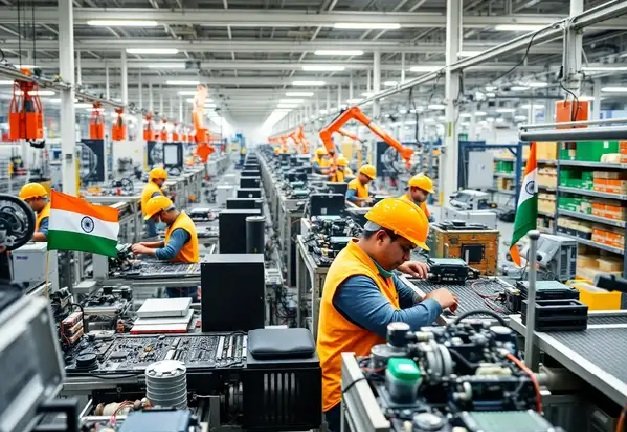
*To scale up manufacturing in seven sectors, push infrastructure
* To develop India as global pharma manufacturing hub
* To allocate 100 billion rupees for biopharma over 5 years
* Proposes to increase 400 billion rupees spending for semi-conductor manufacturing
* Proposes to develop seven high-speed rail corridors
* Proposes spending 200 billion rupees for carbon emission cutting programs over 5 years
* Proposes to set up 100 billion rupees growth fund to support small businesses
* To set up high level committee to suggest banking reforms
* Proposes allowing people outside India to invest in equity of listed companies
 * To increase investment limit for individual PROIs (Persons resident outside India) to 10% from 5%
* Overall investment limit for all PROIs raised to 24% from 10%
* Proposes new framework with suitable access to funds and derivatives on corporate bond indices
India’s annual budget made a fresh bet on the country’s manufacturing sector as Finance Minister Nirmala Sitharaman laid out priorities for Asia’s third-biggest economy and pledged to accelerate growth amid a volatile global environment.
The budget for the next fiscal year will focus on structural reforms particularly in the manufacturing sector, building a robust financial sector and stepping up investments in cutting-edge technologies, including artificial intelligence, she said.
The Modi government has been struggling to raise manufacturing from the current level of under 20% of GDP to 25% to generate jobs for the millions entering the nation’s workforce each year.
The Indian economy is seen growing at 7.4% in the current financial year, with inflation expected at near 2%. The government’s fiscal deficit for the year is expected at 4.4% of GDP.
To spur private investment and demand, New Delhi has rolled out a series of reforms in recent months, including consumption and income tax cuts, overhaul of labor laws and steps to open up the tightly controlled nuclear-power sector.
The budget will prioritize scaling up manufacturing across seven sectors, Sitharaman said. They include pharmaceuticals, semiconductors, rare earth magnets, chemicals, capital goods, textiles and sports goods.
The government will also revive 200 legacy industrial clusters.
The government will bring down its debt-to-GDP ratio to 55.6% from 56.1 in the current year. Starting this year, the government has adopted debt-to-GDP as the target for fiscal policy.
To meet this debt target, the fiscal deficit is seen at 4.3% in the new financial year, at par with the current year.