 Pressmediaofindia
Related Articles



23-01-2026
Bureau Report
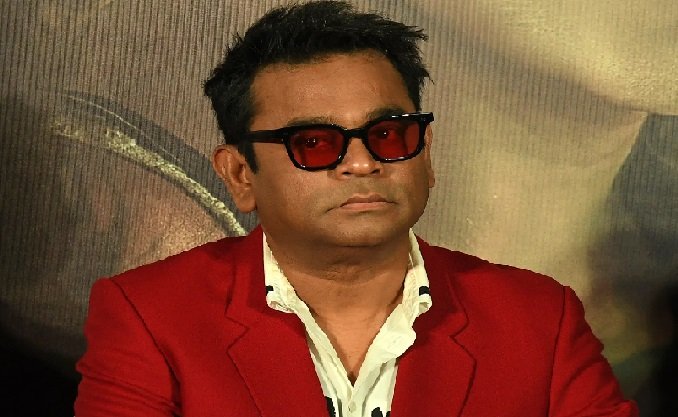
NEW DELHI: Allah Rakha Rahman, popularly known as AR Rahman, is undoubtedly India’s most famous composer. He has won some of the world’s most coveted musical awards including Oscars, Grammys and a Golden Globe. His song Jai Ho (May You Win), which won him an Oscar, became a celebrated anthem. The 59-year-old “Mozart of Madras” has also been honored with Padma Vibhushan, India’s third highest civilian award, for his contribution to music.
 Last week, when Rahman, a man of few words, shared in an interview that he potentially has lost work due to “communal” bias in Bollywood, India’s Hindi film industry, he was subjected to a massive online backlash from Hindu right-wing voices.
Barring a few outspoken voices, industry insiders have closed ranks, offering no solidarity and distancing themselves from the remarks.
Within a day, the composer was forced to tender an explanation amid an unrelenting stream of social media trolling. In a video posted to his Instagram account, Rahman said: “I understand that intentions can sometimes be misunderstood, but my purpose has always been to uplift, honor and serve through music.”
He stressed that he remained grateful to the nation and noted that he had thanked Indian Prime Minister Narendra Modi for his support of India’s entertainment industry and young creatives and was working on the background score for the upcoming film Ramayana, based on the Hindu epic, with German composer Hans Zimmer.
Rising religious intolerance in India but the backlash on social media continued for days, bringing into the spotlight the struggle of being a Muslim amid rising religious intolerance in India.
“Incredible to see Rahman being moved from the good Muslim to the bad Muslim category overnight,” Indian journalist Fatima Khan posted on social media.
“Almost every Muslim public figure in India has had or will have the penny drop moment. No matter how many patriotic songs, movies or tweets. They’ll all live through the cruelty of it.”
 Online trolling helps manufacture majoritarian consent, according to Debasish Roy Chowdhury, coauthor of To Kill a Democracy: India’s Passage to Despotism.
He argued that when enough noise is generated on social media, it seeps into mainstream coverage and starts to look like the dominant social mood.
“The loudest voices then drown out tolerance and reason until hate is all that is heard and can be falsely claimed as representative of society,” said Roy Chowdhury, who has written about Bollywood being used as a propaganda tool.
Hindu right’s influence on art and cinema
Rahman isn’t known for being outspoken about politics or talking about his Muslim identity. He has worked on a fair share of nationalist films, including Roja, released in 1992 and celebrated for its patriotic themes and portrayal of the armed rebellion in India-administered Kashmir in the 1990s.
Rahman’s 1997 song Maa Tujhe Salam (Salute to You, Mother) on his album Vande Mataram was seen as unifying the diverse nation of 1.4 billion people.
The composer started his career in the southern Tamil film industry. He is based in Chennai, the capital of Tamil Nadu state.
The Oscar winner’s comments last week raised questions about the Hindu right’s influence on art and cinema in India, particularly in Bollywood.
The Hindi film industry has been called out for producing films that echo Hindu supremacist narratives, works that vilify Muslims and secular leaders, or even glorify Hindu extremists.