 Pressmediaofindia
Related Articles



09-01-2026
Bureau Report
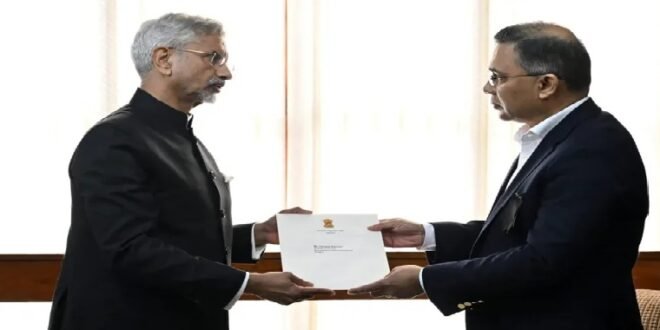
NEW DELHI: Dressed in black for the occasion, India’s Foreign Minister S Jaishankar met Tarique Rahman, son of the deceased former Bangladeshi’s Prime Minister Khaleda Zia, with sombre expressions on their faces.
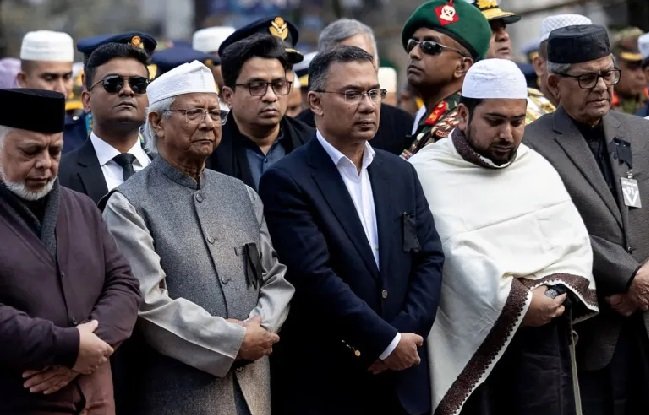 Khaleda had passed away the previous day, on December 30, and Jaishankar was among a large group of regional leaders who had gathered in Dhaka, the capital of Bangladesh, for her funeral.
Jaishankar handed Rahman, who has taken over the leadership of Khaleda’s Bangladesh Nationalist Party (BNP), a letter from Indian Prime Minister Narendra Modi. Then, in a post on social media alongside photos of their meeting, Jaishankar wrote words that demonstrate a dramatic break with New Delhi’s past relationship with the BNP: “Conveyed deepest condolences on behalf of the Government and people of India. Expressed confidence that Begum Khaleda Zia’s vision and values will guide the development of our partnership.”
For decades, India had been at times, publicly, on other occasions, privately opposed to Khaleda’s “vision and values”.
Where for millions of her supporters in Bangladesh, she represented a heroic struggle against military rule in the 1980s that first brought her to power in 1991, India viewed her with suspicion and distrust. For decades, the BNP had an alliance with Jamaat-e-Islami, Bangladesh’s largest Islamist group that advocates for stronger ties with Pakistan, India’s arch-enemy. Meanwhile, India treated Khaleda’s rival, Sheikh Hasina, and her avowedly secular Awami League party as its natural partners but as Bangladesh prepares for national elections in February, Jaishankar’s comments underscore how India and the BNP appear to be pivoting from their animus towards a closer working relationship.
Jaishankar’s “very cordial” meeting with Rahman and his team of confidantes in Dhaka presented the “potential of a new phase in the bilateral relationship”, Humayun Kabir, foreign affairs adviser to Rahman, told media.
 It’s a shift that circumstances have forced on both India and the Rahman-led BNP, say analysts.
A new start?
Since the student-led July 2024 uprising toppled Sheikh Hasina’s 15-year rule, New Delhi’s decades-long support for the ousted leader has prompted strong anti-India sentiments on Bangladeshi streets.
Hasina now lives in exile in New Delhi, and India has so far refused to return her to Bangladesh to face the death penalty, after being convicted in absentia by a tribunal on charges related to the brutal crackdown by her security forces on protesters last year. The United Nations estimates that about 1,400 people died in the crackdown.
Bilateral relations have continued to slide further: After a 2024 protest leader who was vocally anti-India was murdered, protests against India picked up again in Bangladesh. A Hindu Bangladeshi man was lynched. Both countries had to temporarily suspend visa services at their respective high commissions but Hasina’s Awami League is banned from participating in the February elections. And some analysts believe that the BNP is trying to occupy the liberal and centrist political space vacated by the Awami League. It has also broken up with the Jamaat, the Islamist group has since partnered with a party formed by leaders of the 2024 student protest movement, in a formidable alliance.
The BNP and the Jamaat-led coalition are seen as the frontrunners competing to form the next government after the February elections. And while India can’t reconcile with the Jamaat’s politics and its pro-Pakistan tilt, Rahman has in recent days made statements that are far more palatable to New Delhi.