 Pressmediaofindia
Related Articles



26-01-2026
Bureau Report
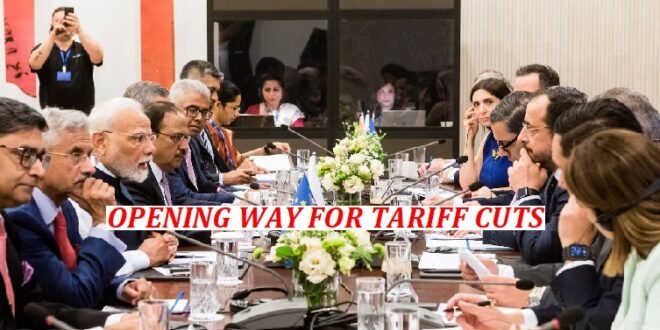
NEW DELHI: India and the European Union are expected to announce the conclusion of protracted negotiations for a free trade pact on Tuesday, two Indian and EU government sources said.
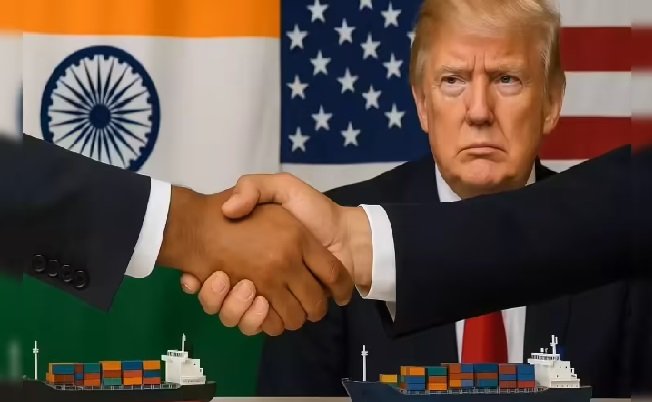 The deal will open the way for reduced tariffs on European cars and wine and an expanded market for Indian electronics, textiles and chemicals.
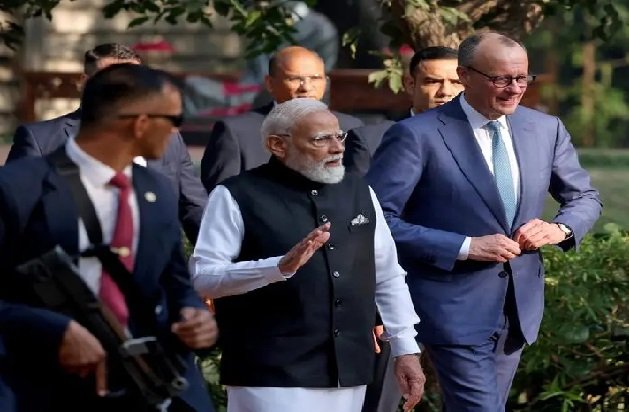
An announcement could follow Indian Prime Minister Narendra Modi’s meeting with European Council President Antonio Costa and European Commission President Ursula von der Leyen, who will co-chair an India-EU summit during their visit to India from January 25 to 28, one of the Indian government sources said.
An EU official said the bloc aimed to “conclude negotiations on the free trade agreement” (FTA) during the summit, before both sides move through internal procedures towards signing.
The two sides also expect to sign a security and defence pact, Europe’s third in Asia after deals with South Korea and Japan along with a mobility agreement covering high-skilled workers and students, the official said.
Flurry of trade deals as countries hedge US ties
If finalized and ratified by the European Parliament, which could take at least a year, the trade pact would boost Indian exports such as textiles and jewelry, the Indian official said. Negotiations were relaunched in 2022 after a nine-year pause, gaining traction last year amid rising global trade tensions.
In August, US President Donald Trump doubled tariffs on Indian imports to as much as 50%, among the highest in the world.
At the World Economic Forum in Davos on Tuesday, von der Leyen said the EU was close to concluding the agreement but acknowledged additional work remained.
 It follows a recent EU deal with South American bloc Mercosur and other trade agreements. India has also sealed pacts with partners including Britain, New Zealand and Oman.
The deals underscore efforts to hedge against the US, as Trump’s push for control over Greenland and tariff threats on European nations test longstanding Western alliances.
Bilateral trade between India and the EU totaled $136.5 billion in the fiscal year to March 2025, making the 27-nation bloc one of India’s biggest trading partners.
“Negotiators are still trying to bridge differences on several sensitive issues, including India’s reluctance to sharply cut tariffs on auto imports,” an EU government source said.
Lower car import taxes would help European automakers such as Volkswagen, opens new tab and Renault, opens new tab expand in India by making imported models more price-competitive. India, the world’s third-largest car market, has attracted global players, but high tariffs have made growth difficult.
India’s commerce ministry did not immediately respond to an email requesting comment.
A key concern for New Delhi is a range of non-tariff barriers, such as the EU’s newly introduced carbon levies on imports of goods including steel, aluminum and cement.
The bloc has also withdrawn some tariff reductions granted to India as Brussels unwinds special tariff treatment for select countries under its Generalized System of Preferences (GSP).
The suspension, extended this month for another two years, will hit Indian exports worth $1.95 billion, India’s trade ministry said on Friday, although an FTA would help offset that.