 Pressmediaofindia
Related Articles

20-03-2026
Bureau Report + Agencies
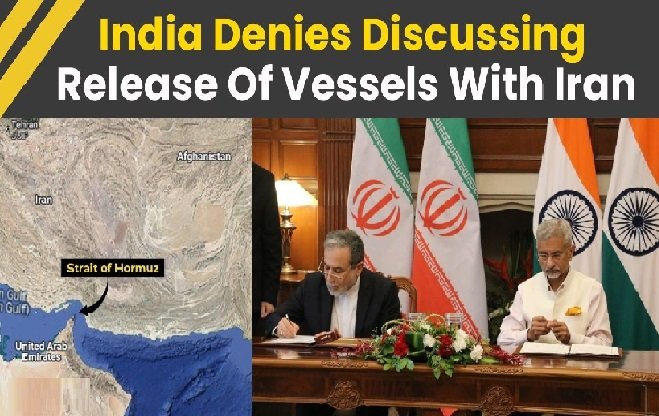
NEW DELHI: India on Tuesday denied holding talks with Iran about releasing three tankers seized in February in exchange for ensuring safe passage for Indian ships through the Strait of Hormuz.
 Indian authorities seized the three Iran-linked ships near Indian waters alleging they had concealed or altered their identities and were involved in illegal ship-to-ship transfers at sea.
Media reported on Monday, citing sources, that Iran had asked India to release the US-sanctioned ships as part of talks seeking the safe passage of Indian-flagged or India-bound vessels out of the Gulf via the Strait. Traffic has ground to a near standstill on either side of the Strait since the beginning of the US-Israeli war with Iran. India’s foreign ministry spokesperson, Randhir Jaiswal, called the report baseless. “There has been no discussion of this nature,” he told a news briefing. “I would also like to say the three vessels you referred to are not Iranian-owned.”
Vessels linked to US-Sanctioned Network
The seized tankers, Asphalt Star, Al Jafzia and Stellar Ruby, are currently docked off Mumbai. Stellar Ruby is Iranian-flagged, while the other two vessels are flagged to Nicaragua and Mali, according to LSEG data.
A police complaint filed by the Indian Coast Guard on February 15, and seen by Reuters, said Asphalt Star was involved in the smuggling of heavy fuel oil that was transferred to Al Jafzia and bitumen to Stellar Ruby.
All three ships are tied to entities under US sanctions for allegedly helping transport Iranian oil. The consultant for the vessels, Jugwinder Singh Brar is himself on a US sanctions list, though he denies any illicit activity.
At the time of the seizure, Iranian state media cited the National Iranian Oil Company as saying that the three tankers had no connection to the company.
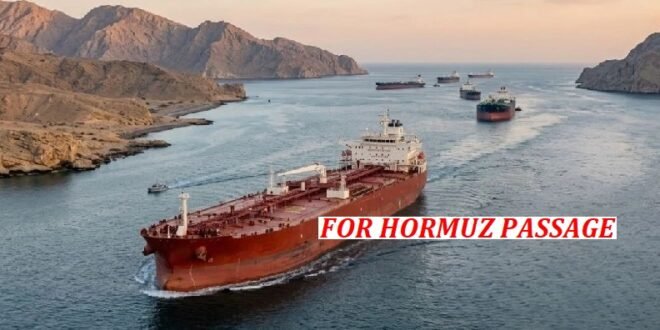
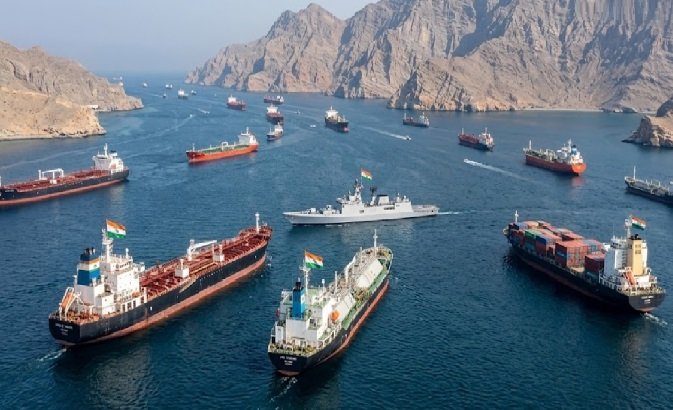
Iran has in recent days allowed some Indian ships to safely pass the Strait and Jaiswal said discussions were ongoing to ensure the safe transit of the other ships. At least 22 Indian vessels are still in the waterway, the government says.
 In April, last year, the Trump administration imposed sanctions on Iranian oil trading networks on Thursday, including on a China-based crude oil storage terminal linked via a pipeline to an independent refinery, just days before talks between the US and Iran. The sanctions came after Secretary of State Marco Rubio said the US will hold direct talks with Iran on Saturday in Oman. President Donald Trump said on Monday that Iran would be in “great danger” if the talks were unsuccessful.
The US imposed sanctions on Guangsha Zhoushan Energy Group Co Ltd, which operates a crude oil and petroleum products terminal on Huangzeshan Island in Zhoushan that knowingly engaged with oil from Iran and is connected through the Huangzeshan–Yushan Under Sea Oil Pipeline to an independent refinery, the US State Department said. “This terminal is directly connected to a major refinery complex in China, demonstrating the role that China-based refiners continue to play in the purchase, acquisition and processing of Iranian crude oil,” the State Department said, without naming the refinery.
However, tanker tracking firms Vortexa and Kpler and trade sources told media that the refinery has refrained from buying Iranian oil. The State Department said the terminal had acquired Iranian crude at least nine times between 2021 and 2025, including from US sanctioned vessels, and has imported at least 13 million barrels of Iranian crude oil.
The terminal, in the eastern province of Zhejiang, is not a major player in Iranian oil, which lands mostly in independent refining hub Shandong province to the north.