 Pressmediaofindia
Related Articles


25-02-2026
Bureau Report + Agencies
NEW DELHI/ WASHINGTON: India has delayed plans to send a trade delegation to Washington this week, chiefly because of uncertainty after the US Supreme Court struck down tariffs imposed by President Donald Trump, a source in its trade ministry said on Sunday.
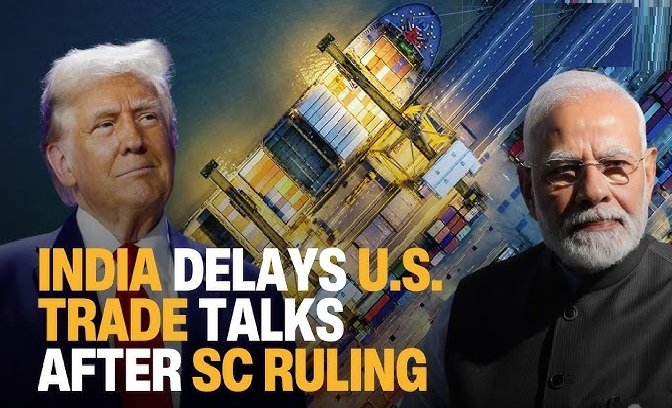 One of the first concrete reactions among Asian nations to the decision, it follows Trump’s move on Saturday to levy a temporary tariff of 15%, the maximum allowed by law, on US imports from all countries, following the court’s rejection.
“The decision to defer the visit was taken after discussions between officials of the two countries,” said the source, who sought anonymity as the matter is a sensitive one. “No new date for the visit has been decided.”
The delay came mainly from the uncertainty over tariffs following Friday’s judgment, the source added.
The delegation had been set to leave on Sunday for talks to finalize an interim trade deal, after both countries agreed on a framework for Washington to cut punitive tariffs of 25% on some Indian exports linked to New Delhi’s Russian oil purchases.
US tariffs on Indian goods were set to be cut to 18%, while India agreed to buy US items worth $500 billion over five years, ranging from energy supplies to aircraft and parts, precious metals and technology products.
India’s opposition Congress party had called for the interim pact to be put on hold, urging a renegotiation and questioning Prime Minister Narendra Modi’s decision to issue a joint statement before the court’s ruling.
On Saturday, the Indian trade ministry said it was studying the implications of the judgment and later US announcements.
Last week, Trade Minister Piyush Goyal said the interim pact could take effect in April, after outstanding issues were resolved during the delegation’s visit to Washington.
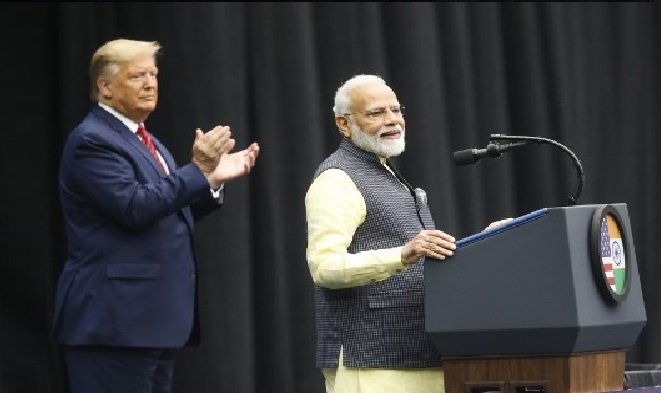 After siding with President Donald Trump in two dozen cases in the past year in ways that boosted his power and let him quickly transform US policies on immigration, military service; federal employment and beyond, the US Supreme Court finally reached its limit.
The court on Friday upended one of Trump’s top priorities in his second term as president, deciding in a blockbuster ruling, opens new tab that his imposition of sweeping global tariffs on nearly every US trading partner exceeded his powers under federal law. The ruling, authored by conservative Chief Justice John Roberts, did not waffle in its scope or effect, or leave questions about the legality of the tariffs to another day. It unswervingly struck them down, making no mention of the consequences for refunds, trade deals or the Republican president himself.
In doing so, the court also reasserted its role as a check on the other branches of government including the president, after a year when numerous critics and legal scholars had increasingly voiced doubts.
“The court has shown it will not necessarily provide legal cover for every plank of Trump’s platform,” said Peter Shane, an expert in constitutional law and the presidency at New York University School of Law.
President Donald Trump said on Saturday he will raise a temporary tariff from 10% to 15% on US imports from all countries, the maximum level allowed under the law, after the US Supreme Court struck down his previous tariff program.
The move came less than 24 hours after Trump announced a 10% across-the-board tariff on Friday after the court’s decision. The ruling found the president had exceeded his authority when he imposed an array of higher rates under an economic emergency law.