 Pressmediaofindia
Related Articles


12-04-2026
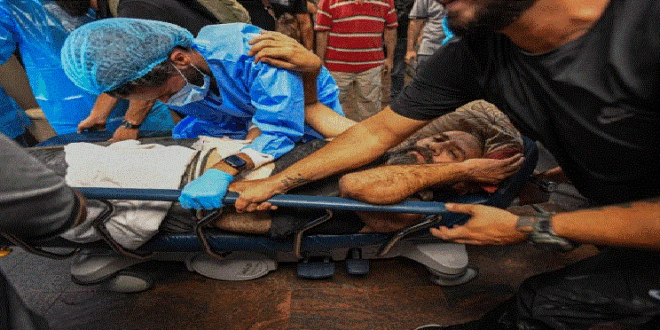
BEIRUT: As bombs rained down on Lebanon’s capital, hundreds of people rushed to the American University of Beirut (AUB) Hospital, many crying, many scared. Children were looking for their siblings or their parents, unsure if they were dead or alive.
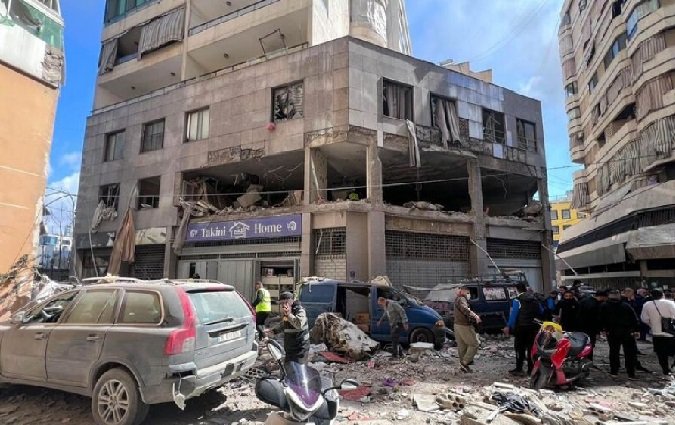 Israeli forces had bombed 100-plus targets across the country in 10 minutes on Wednesday, despite a ceasefire agreement between the US and Iran that many thought would include Lebanon.
“In under an hour, we received around 76 injured people. Unfortunately, six people didn’t make it,” Dr Salah Zeineldine, AUB’s chief medical officer, told media, as the hospital became an “epicentre” for victims of the Israeli attacks.
The death toll from Israel’s attacks across Lebanon on Wednesday has now risen to 303, with 1,150 injured, according to a preliminary toll released Thursday by the Lebanese Ministry of Public Health.
Dr Zeineldine noted that a lot of critically injured patients at AUB Hospital were children. The eldest child was 12 years old, while the two patients who had to go directly to the ICU were babies: one a few months old, another only a few weeks old.
The Lebanese Health Ministry said that at least 110 children, women, and elderly people were among those killed on Wednesday.
The main causes of deaths and injuries were from people being crushed due to the blast and parts of buildings falling on them, causing fractured bones and head trauma.
‘A nightmare’
Lebanon is no stranger to war or Israeli air strikes, and medical workers in the country have dealt with many crises in recent years, notably during the 2023-2024 war with Israel, but Dr Zeineldine insists that what happened on Wednesday was “a different ballgame altogether”.
“It was a big challenge for us, in Beirut especially. We’ve never lost this many people in a single day. This intensity is not something we’ve ever experienced,” he said.
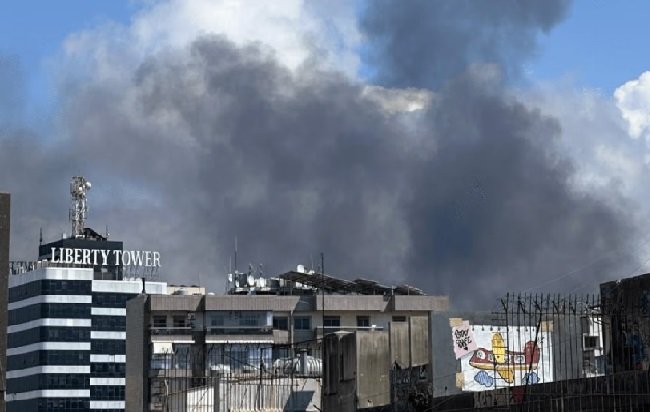 “All the patients we got were civilians,” Dr Zeineldine said, adding that the attack was “very random”, not targeting any specific place or group of people. Israel had claimed the attacks targeted the Iranian-backed Hezbollah, but the victims, according to Dr Zeineldine, included “lots of children, women, men, elderly people; all kinds of people in the civilian strata”.
At Rafik Hariri University Hospital, a medical coordinator from Doctors Without Borders, known by its French acronym, MSF, reported that “injured parents were calling out for their children. Families were coming with children’s pictures, asking if anyone had seen their loved ones”.
The number of casualties is still likely to rise, as rescue workers were still pulling people out of the rubble on Thursday but even the current figure is already higher than the estimated 218 people who died from the Beirut port blast in 2020, one of the largest non-nuclear explosions in history, and another recent event that devastated Beirut and stretched Lebanon’s healthcare system to its limits.
In several Beirut hospitals, many medical workers were tired yet determined to keep going. Speaking on Thursday at the Hotel-Dieu de France Hospital in Beirut, Dr Antoine Zoghbi, the president of the Lebanese Red Cross, shook his head in disbelief in his office, his eyes tired and mouth dry. “This is a nightmare, a nightmare,” he repeated over and over again.
Medical officers in Beirut hospitals told media that they prepare their teams for crisis situations to react quickly and effectively to help patients, but added that no one could have expected intense days like these with indiscriminate attacks on civilians. (Int’l News Desk)