 Pressmediaofindia
Related Articles



17-11-2025
By SJA Jafri + Bureau Reports + Agencies
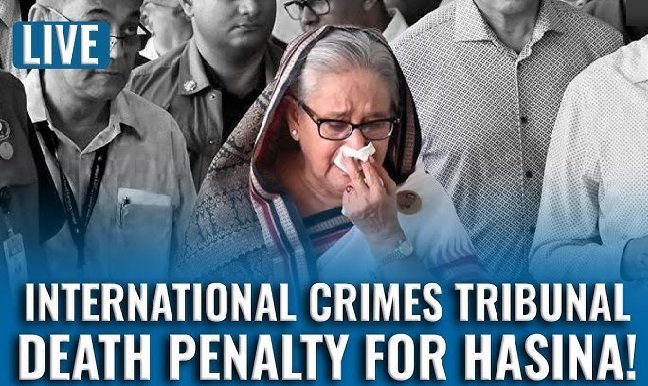
NEW DELHI/ DHAKA/ KARACHI: Bangladesh International Crimes Tribunal has sentenced former Prime Minister Sheikh Hasina to death for crimes against humanity over her government’s violent crackdown on student-led protests last year.
 The 78-year-old fugitive politician was on trial in absentia for being the “mastermind and principal architect” behind last year’s suppression of mass demonstrations, in which some 1,400 people were killed.
The tribunal also sentenced former Home Minister Asaduzzaman Khan to death for his involvement in the use of deadly force against protesters. Both Hasina and Khan fled to India last year.
A third suspect, former police chief Chowdhury Abdullah Al-Mamun, was sentenced to five years in prison after becoming a state witness against Hasina and pleading guilty.
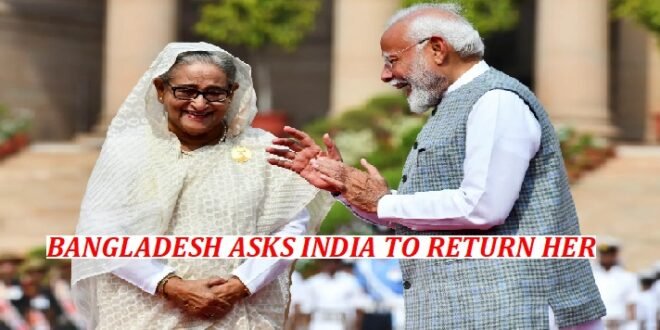
Bangladesh has demanded India should “immediately hand over” Hasina and Khan. New Delhi is yet to respond.
Hasina death sentence a ‘historic moment for justice’
Bangladesh’s acting head of the law ministry, Professor Asif Nazrul, calls the tribunal’s death sentences for former PM Sheikh Hasina and ex-Home Minister Asaduzzaman Khan “one of the greatest acts of justice” since last year’s uprising.
Speaking to reporters after the verdict, he said: “This is a historic day. The person responsible for the deaths of hundreds and the maiming of thousands has been sentenced to death. It is a victory for the July Uprising.”
 Nazrul added that the government would again request India to extradite Hasina. “If India continues to give refuge to someone responsible for mass killings, it must understand the hostility this creates towards Bangladesh and its people.”
He said the evidence against Hasina and her aides was “so direct and overwhelming” that any court would have imposed the maximum punishment. He also urged future governments to continue all remaining cases linked to the uprising “at full pace”.
“India is committed to best interests of people of Bangladesh”
India’s Foreign Ministry has issued a statement addressing the guilty verdict against Hasina.
The statement said India, which is hosting Hasina in exile, has “noted the verdict” and “remains committed to the best interests of the people of Bangladesh”.
“We will always engage constructively with all stakeholders to that end,” said the statement which did not respond to Bangladesh’s call for India to extradite Hasina and former Home Minister Asaduzzaman Khan Kamal.
It is mentioned here that during the hearing of the said case and after conviction of Sheikh Hasina, masses of both India and Pakistan were involved in hottest debate while an expert and internationally renowned Pakistani intellectual Prof. Dr. Zafar Khan disclosed that both countries should learn with the judiciary of Bangladesh as well as it’s a great lesson for leaders of India and Pakistan too.
It is highly unlikely that India will extradite Sheikh Hasina to Bangladesh. Hasina’s son has spoken in the media, saying she’ll never be extradited, that the Indians will ensure her security.
 This could cause a diplomatic problem between the two countries, whose relations are already at a low point.
It is something that needs to be worked out unless India becomes more accepting of Bangladesh’s new government.
Hasina’s opponents have gathered outside her father’s home-turned-museum to demolish the rest of the building, which was looted and damaged during last year’s protests. They have brought two excavators to demolish the building.
Police charged with batons and used stun grenades to disperse the crowd. In the evening, more than 300 people were still there and burned tyres on streets as security officials remained deployed.
Chief Prosecutor says;
Mohammad Tajul Islam, Bangladesh’s chief prosecutor for the International Crimes Tribunal, says the country “successfully delivered justice” in the crimes against humanity case that resulted in death sentences for Hasina and Khan.
He said Bangladesh maintained “all international norms and standards” while prosecuting what he described as a highly complex case. “The evidence presented here would stand in any court in the world,” he said, adding that the same punishment would have been handed down “in any international jurisdiction”.
Islam said the ruling was “not an act of revenge” but a reflection of the nation’s commitment to justice. “This verdict proves that no one is above the law, no matter how powerful,” he said.
He added that if the judgement brings “even a small measure of comfort” to the families of 1,400 protesters killed during the uprising, the prosecution would consider that “its greatest achievement”.