 Pressmediaofindia
Related Articles



13-01-2026
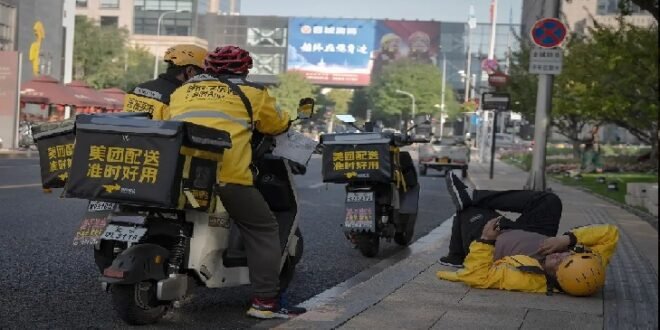
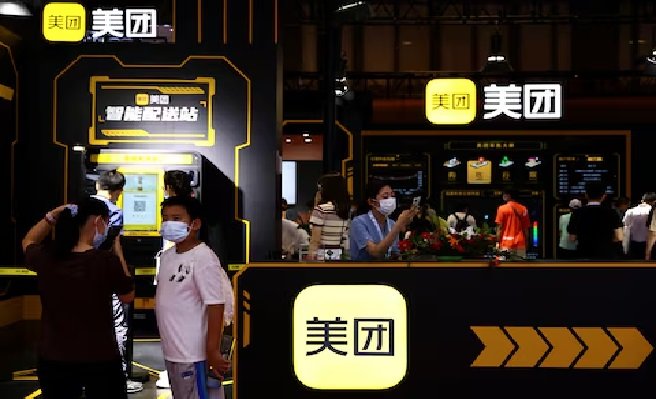
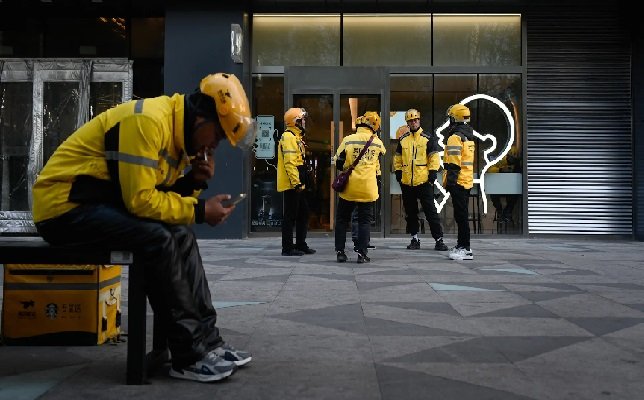
BEIJING: China will investigate cutthroat competition among food delivery platforms operated by tech firms such as Meituan and Alibaba, aiming to rein in price wars that have eroded profits and contributed to deflationary pressures plaguing the economy.
 The State Council has decided to launch the investigation to ensure fair and orderly competition and create a market environment with high quality and reasonable pricing, the State Administration for Market Regulation said in a statement on Friday.
China’s consumer prices ended 2025 at the same level as the year before, missing by a wide margin policymakers’ goal of “around 2%”, despite a government campaign to curb overcapacity and stabilize prices.
Some issues in the food delivery sector, such as excessive subsidies and price wars, squeezed the real economy and intensified “involution-style” competition, the market regulator said. “Involution”, or neijuan in Chinese, refers to excessive competition which often leads to diminishing returns.
Competition is fierce in China’s so-called instant retail market, where goods, from food and beverages to over-the-counter medicine, are typically delivered within the hour.
China’s tech giants Alibaba, opens new tab, Meituan, opens new tab and JD, opens new tab have burned billions of dollars in an expensive bet that the fast-growing delivery segment will be vital to the future of China’s e-commerce market as a whole.
Meituan had for the third quarter last year posted its first quarterly loss since late 2022 and warned of likely further losses in the following quarter as a price war with rivals squeezes margins.
Meituan and Alibaba’s delivery platforms both said on Friday that they welcomed the government investigation and assessment and would fully cooperate.
 Earlier, China’s annual consumer price inflation accelerated to a 34-month high in December, but the full-year rate slumped to the lowest in 16 years while producer deflation persisted, backing market expectations for more stimulus to shore up soft demand.
Imbalances in the $19 trillion economy have worsened over the past year even as growth is on course to meet Beijing’s target of “around 5%” for 2025, buoyed by policy support and resilient goods exports.
US President Donald Trump’s global trade war has added to persistently soft consumer demand, which has remained a drag on confidence and growth for years amid a prolonged property crisis.
The December consumer price index (CPI) rose 0.8% from the same month in 2024, National Bureau of Statistics (NBS) data showed on Friday, matching expectations in a media poll and perking up from the 0.7% increase in November.
The rise was mainly driven by food prices, especially those of fresh vegetables and beef, which expanded 18.2% and 6.9% respectively, Dong Lijuan, a statistician at NBS, said in a statement. Pre-New Year holiday shopping and supportive policies also helped boost consumer prices, Dong added.
Chinese policymakers have repeatedly pledged to support a rebound in prices with monetary policy and have cracked down on excessive competition. They have also vowed to boost people’s income to unleash consumption potential and better align the country’s supply and demand.
Yet, the underlying demand impulse in the economy remains weak.
“Despite expectations of a recovery, inflation remains relatively low and should not preclude further monetary easing this year,” said Lynn Song, ING’s chief economist for Greater China. (Int’l Monitoring Desk)