 Pressmediaofindia
Related Articles

28-02-2026
KATHMANDU: An order allowing the use of lethal fire against thousands of young, unarmed protesters in Nepal was issued by the country’s former police chief, a BBC investigation reveals.
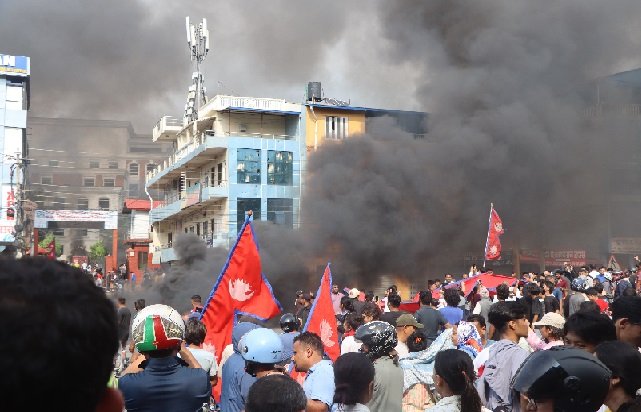 Among the 19 people killed in the capital, Kathmandu, on 8 September last year was a teenager in school uniform, who had been walking away from the crowd when he was shot in the back of the head. Dozens more were injured.
The events at the so-called Gen Z demonstrations which had followed weeks of simmering anger about political corruption sparked further protests leading to the resignation of Nepal’s prime minister and the collapse of its government a day later.
The BBC World Service team has seen an internal police document detailing events on 8 September. It reveals someone using the call sign “Peter 1” told his officers to “deploy necessary force” 10 minutes after a curfew had come into effect, and after repeated requests by officers on the ground to use lethal force.
Peter 1 was the call sign used by Nepal’s former police inspector general, Chandra Kuber Khapung, sources have told BBC Eye Investigations.
Khapung has not denied that he issued the order but Nepal Police says that this was only after he was given authorization by a government security committee and once all other forms of force had been used, in line with Nepali law.
Khapung who retired in November, has not replied to the BBC’s request for comment.
Video evidence examined by the BBC reveals that 17-year-old Shreeyam Chaulagain, the youngest of the 19 victims had been unarmed and was trying to leave the scene when he died.
The events of 8 September are now being examined by a public inquiry, which has yet to report. So far, no-one has been held accountable and general elections are set to take place on 5 March.
 The BBC has established the chain of events, detailed by the leaked police log and supported by insider accounts from serving officers that led to the shootings.
By analyzing visual evidence, including more than 4,000 videos and photos, and details from those on the streets and in the command center where security officials were monitoring events, we have pieced together the most comprehensive account so far of one of the most dramatic and bloody days in Nepal’s recent history.
Nepal is a young democracy. It became a republic in 2008, after a civil war that killed more than 17,000 people and lasted 10 years.
A decade after a new constitution promised a fresh start, many young people say those hopes remain unmet. By some estimates, about one in five young Nepalese is out of work.
Much of the frustration has been voiced online, particularly among Generation Z those currently aged between 14 and 29.
Last August, Gen Z activists began to share terms on social media such as “nepo baby”, to describe the privileged children of the Nepalese elite. On 4 September, the government banned some platforms, including Facebook, YouTube, Instagram and X. Activists moved onto the gaming chat platform Discord, which became a hub for organizing.
In one forum, Youth Against Corruption (YAC), members planned the protest outside parliament on 8 September.
Shreeyam Chaulagain’s mother did not want him to go.
“I told him not to participate. Things can happen at protests,” she told the BBC but Shreeyam was deeply engaged with politics, his father said. “He said corruption had hollowed out (Nepal). He was far more informed than I was.” (BBC)