 Pressmediaofindia
Related Articles



15-11-2025
DHAKA: When Sheikh Hasina was ousted as Bangladesh’s prime minister in August 2024 after a student-led uprising, many in the country believed the darkest days of enforced disappearances and extrajudicial killings were finally over.
 The interim administration, led by Nobel Peace Prize laureate Muhammad Yunus, who was sworn in on August 8 last year, began with promises of justice, reform, and an end to state violence but more than a year on, those promises are under question.
A new report by the Bangladeshi rights group Odhikar shows that while the number of killings has fallen sharply, the system of impunity that allowed such abuses to flourish remains largely intact.
Here is what the findings show and why they matter as Bangladesh prepares for parliamentary elections in February to choose its next government.
From 2009, when Hasina came back to power after six years spent out of office to 2022, Bangladesh’s security forces are accused of having killed at least 2,597 people through extrajudicial executions, custodial torture or by opening fire on protesters, an analysis of human rights data suggests.
Human rights excesses under Hasina were a major trigger for the mass protests that culminated in her ouster but according to Odhikar’s latest report, there were at least 40 victims of extrajudicial killings from August 2024 to September 2025 under the Yunus-led interim government.
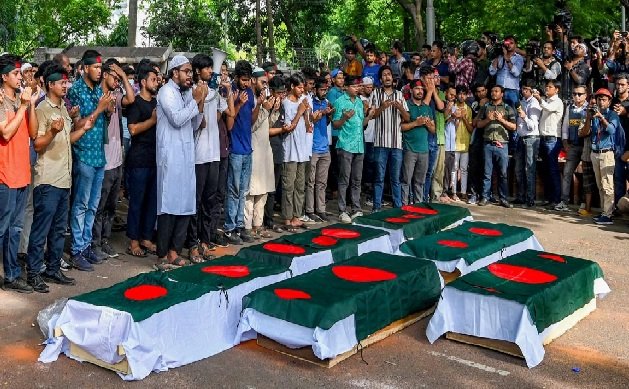
The victims were shot, tortured in custody, or beaten to death, methods chillingly reminiscent of the previous government. The victims included political activists, detainees held without warrants, alleged criminals, and citizens caught in security operations, according to the report, based on information from human rights defenders affiliated with Odhikar, as well as information and data published across various media outlets.
While the scale of these incidents is smaller than during Hasina’s rule, the continuation of such practices has alarmed human rights defenders.
 “We are seeing a gradual increase in the number of extrajudicial killings, which is not what we expected,” Nur Khan Liton, rights activist and member of the Commission of Inquiry on Enforced Disappearances (COIED), told media. The commission is a government-appointed investigative body formed on August 27, 2024, by the Yunus administration. It is tasked with investigating widespread disappearances under the previous government, identifying those responsible, and ensuring justice and reparations for victims and their families.
The interim government, made up of academics and former civil servants, had been among the loudest critics of Hasina’s rule. Yunus himself spoke of building a “Bangladesh free from fear”.
Yet the same security agencies, police, paramilitary Rapid Action Battalion (RAB), and intelligence units, continue to operate without meaningful reform or external oversight, rights groups said.
In several cases, detainees were picked up by security forces; taken to army camps, RAB camps or police stations; and later declared dead in the hospital.
Asif Shikdar, a youth leader of the Bangladesh Nationalist Party’s (BNP’s) youth wing, was arrested by joint security forces in Mirpur, Dhaka, in July, reportedly on allegations of illegal arms possession, which his family and party said were fabricated.
Hours after his arrest, he was taken to Shaheed Suhrawardy Hospital and declared dead with the death certificate stating only “unconscious on arrival”. (Int’l News Desk)