 Pressmediaofindia
Related Articles


07-03-2026
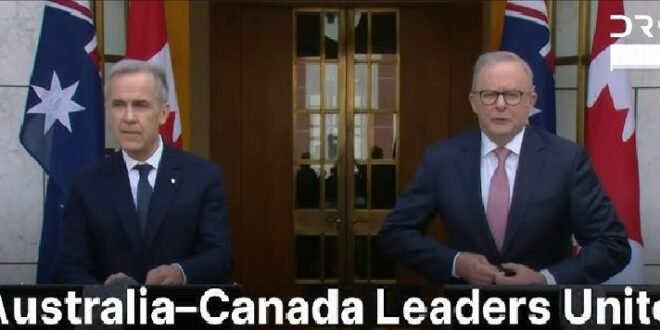
CANBERRA: Australia’s Prime Minister Anthony Albanese has joined Mark Carney in declaring an end to the international rules that have governed the Western world since World War II, in a pivotal moment underscoring how middle powers such as Canada and Australia are dealing with the volatility of a second Trump presidency.
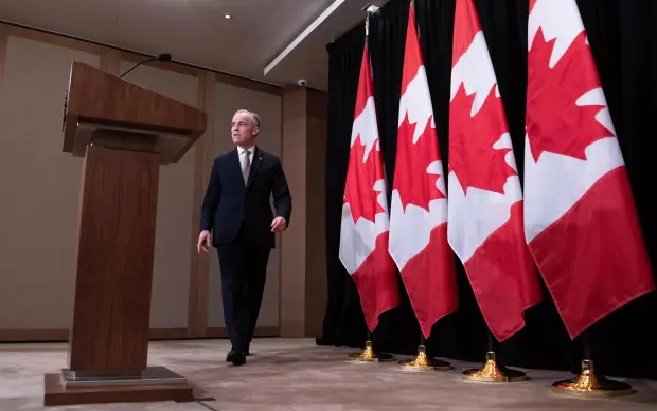 In the first address to parliament by a Canadian leader since 2007, Carney said Australia and Canada were “strategic cousins” who could jointly establish the rules and conventions of a new world order where middle powers could form coalitions offering autonomy from the demands of superpowers such as China and the US but foreign affairs analysts say the push for greater middle-power self-determination creates a dilemma for Australia, which has simultaneously tightened its defence dependence on Washington through the AUKUS nuclear submarine program.
“In a post-rupture world, the nations that are trusted and can work together will be quicker to the punch, more effective in their responses, more proactive in shaping outcomes, and ultimately more secure and prosperous,” Carney said.
“Canada and Australia have earned this trust throughout our history. The question now is what we do with it.”
Carney has emerged as a leading global voice for an assertive middle-power diplomacy since his speech at Davos in January that went viral, where he declared the post-war rules-based order a “fiction” and urged like-minded nations to band together to protect their interests as Trump upends geopolitical norms.
The remarks were made on the third day of Carney’s four-day visit to Sydney and Canberra, amid the unfolding conflict between the US and Iran. Although Carney had earlier said the US airstrikes were “inconsistent with international law”, on Thursday, he maintained that “we will stand by our allies”.
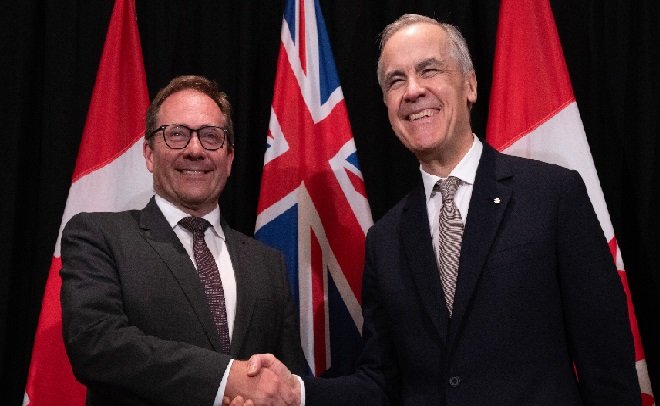
Australia has been far less forthright than Carney in criticizing the Trump administration, but on Thursday Albanese endorsed the comments by the Canadian leader. “As two middle powers in an era of strategic competition, Australia and Canada must seek and create new ways to stand with, and for each other.”
 The government has to date focused on strengthening ties with other middle powers through regional forums such as ASEAN and the Pacific Islands Forum to diversify its economic and strategic relationships.
Opposition Leader Angus Taylor also offered bipartisan support for a new approach to Australian foreign policy, describing the rules-based international order as “wishful thinking of a bygone and benign era”.
“In this brave new world, middle powers cannot simply build higher walls and retreat behind them. We must work together. We must act together. Closer than ever,” he told the House of Representatives. Echoing his Davos speech, Carney told parliament the rules-based system that Australia and Canada had helped build over decades was breaking down. “It is my fundamental belief … that from this rupture we can build something better, more prosperous, more resilient, more just,” Carney said.
“The question for middle powers like us is whether we establish the conventions and write the new rules that will determine our security and prosperity, or let the hegemons increasingly dictate outcomes.”
On Wednesday, he and Albanese signed a series of agreements to expand on critical minerals co-operation, including Australia joining the Canada-led G7 minerals alliance to diversify critical minerals’ production.
“In the old world and even to a degree today, the temptation has been to see ourselves as competitors [for critical minerals]. In this new world, we should be strategic collaborators,” Carney said. The two countries produce about one-third of the world’s lithium and uranium, as well as 41 per cent of its iron ore. (Int’l Monitoring Desk)