 Pressmediaofindia
Related Articles


13-03-2026
NEW YORK: Surging energy prices caused by the US-Israel war on Iran could ripple across the United States economy, heaping further strain on consumers at a time when cost-of-living issues are already a primary concern.
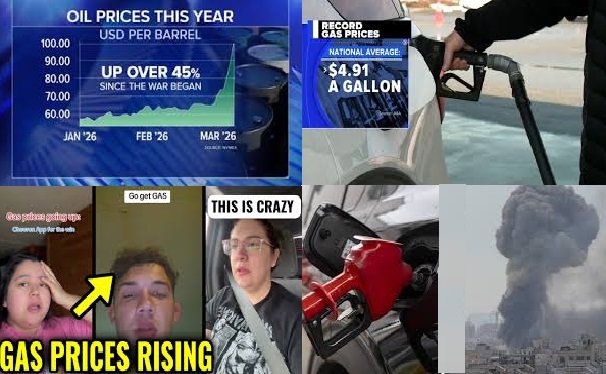 The price of crude oil increased from about $67 per barrel before the war began on February 28 to nearly $97 on Monday, as the conflict snarls production and transport in one of the most energy-rich regions on earth. Oil temporarily passed $100 per barrel on Sunday before slightly easing back.
The price tracker GasBuddy reported on Monday that the average price of gas in the US has risen by 51 cents per gallon over the last week.
“Yes, yes, definitely,” said 52-year-old Alma Newell when asked if she was worried about price increases at a gas station in the coastal city of Goleta, California.
Newell said she is out of work with a shoulder injury and worried that rising costs could stretch her already limited budget.
“The prices have a big impact because I’m not working right now,” she said. “Food and rent are already very expensive.”
“It’s crazy,” she added. “Because the war is so unnecessary.”
Cost of living issues
Rising prices could deepen frustration with the administration of US President Donald Trump and put greater political pressure on the White House, already struggling to address cost-of-living issues with the crucial midterm elections set to take place later this year.
“I think the current price increase in oil suggests the US will see $3.50 to $4 gasoline by next week, and $5 diesel this week,” said Gregory Brew, a senior analyst on Iran and oil at the Eurasia Group.
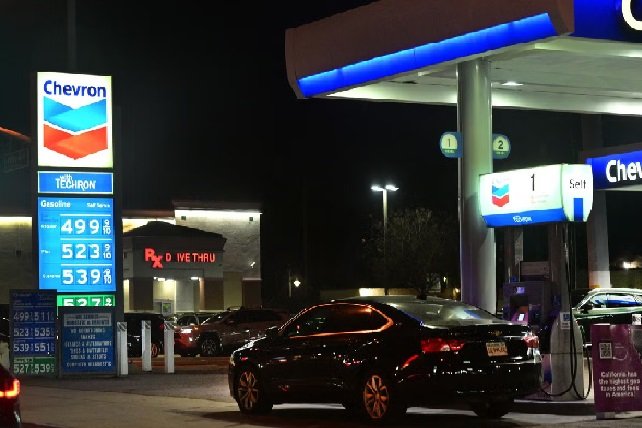 The highest recorded average for gas prices at the pump was in June 2022, when prices soared to $5.034, months after the Russian war on Ukraine started, according to Gas Buddy, which tracks fuel prices going back to 2008.
“The impact (now) is more political than economic, as high gasoline prices generate negative press and can add to the perception that the government is not properly handling the economy. That means Trump will feel more political pressure to end this war quickly.”
A Pew Research Center poll in early February suggested widespread anxiety about the rising cost-of-living before the US and Israel launched attacks on Iran, with 68 percent of respondents saying they were very or somewhat concerned about gas prices.
“I’m not too worried myself because I have a hybrid car and ride my bike,” said 72-year-old Bjorn Birmir at the gas station in Goleta, California. “But for people in general, it will make life more expensive. Prices are already high, and it will make them even higher.”
The disruptions caused by the war include the shuttering of the Strait of Hormuz, a key node in global transit and shipping. Iran has long said that it could close down the strait in the event of a showdown with the US and Israel.
About 20 percent of global oil and a significant portion of natural gas pass through the strait, predominantly to Asia, supplies that are now stranded as traffic through the narrow waterway has ground to a halt. Iranian attacks on energy infrastructure in countries across the region have also led some countries to scale back production.
Other economic sectors are also feeling the squeeze.
Goods such as fertilizer, vital for agricultural production, are seeing price increases just ahead of the spring planting season in the Northern Hemisphere. About one-third of the global fertilizer trade passes through the Strait of Hormuz. (Int’l News Desk)