 Pressmediaofindia

Related Articles


26-12-2025
LONDON: The State Department announced Tuesday it was barring five Europeans it accused of leading efforts to pressure US tech firms to censor or suppress American viewpoints.
 The Europeans, described by Secretary of State Marco Rubio as “radical” activists and “weaponized” nongovernmental organizations, fell afoul of a new visa policy announced in May that restricts the entry of foreigners deemed responsible for the censorship of protected speech in the United States.
“For far too long, ideologues in Europe have led organized efforts to coerce American platforms to punish American viewpoints they oppose,” Rubio posted on social media. “The Trump administration will no longer tolerate these egregious acts of extraterritorial censorship.”
The five Europeans were identified by Sarah Rogers, the undersecretary of state for public diplomacy, in a series of social media posts. They include leaders of organizations that address digital hate and a former European Union commissioner who clashed with tech billionaire Elon Musk over broadcasting an online interview with US President Donald Trump.
Rubio’s statement said they advanced foreign government censorship campaigns against Americans and US companies, which he said created “potentially serious adverse foreign policy consequences” for the United States.
The action to bar them from the US is part of a Trump administration campaign against foreign influence over online speech, using immigration law rather than platform regulations or sanctions.
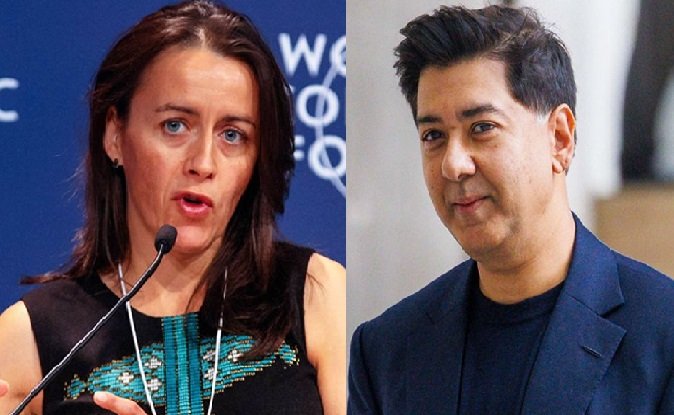
The five Europeans named by Rogers are Imran Ahmed, chief executive of the Centre for Countering Digital Hate; Josephine Ballon and Anna-Lena von Hodenberg, leaders of HateAid, a German organization; Clare Melford, who runs the Global Disinformation Index; and former EU commissioner Thierry Breton, who was responsible for digital affairs.
 In her post on social media, Rogers called Breton, a French business executive and former finance minister, the “mastermind” behind the EU’s Digital Services Act, which imposes strict requirements designed to keep internet users safe online, including the flagging of harmful or illegal content such as hate speech.
She referred to Breton warning Musk of a possible “amplification of harmful content” by broadcasting his livestream interview with Trump in August 2024, when Trump was running for president.
Breton, a former French finance minister and the European commissioner for the internal market from 2019 to 2024, was the most high-profile individual targeted.
Breton was replaced in the internal market role at the EU by another French politician, Stephane Sejourne, who is the EU Commission’s executive vice president. Sejourne criticized the US visa ban and defended the EU’s Digital Services Act.
“No sanction will silence the sovereignty of the European peoples. Total solidarity with him and all the people of Europe affected by this,” wrote Sejourne on social media. Breton himself also condemned the visa ban against him.
“Is McCarthy’s witch hunt back? As a reminder: 90% of the European Parliament, our democratically elected body and all 27 Member States unanimously voted the DSA. To our American friends: Censorship isn’t where you think it is,” wrote Breton on social media. French President Emmanuel Macron slammed the decision to impose visa bans on Breton and other anti-disinformation campaigners.
“France condemns the visa restriction measures taken by the United States against Thierry Breton and four other European figures. These measures amount to intimidation and coercion aimed at undermining European digital sovereignty,” Macron said on social media. (Int’l Monitoring Desk)